Trying to buy in DC without stretching your budget too thin? You are not alone. For many buyers, the real question is not whether to buy, but whether a condo or a rowhouse gives you the best mix of price, space, and monthly cost. If you are weighing both options in Washington, DC, this guide will help you compare the numbers, the tradeoffs, and the questions to ask before you commit. Let’s dive in.
DC Price Gap Matters
In Washington, DC, the condo versus rowhouse decision often starts with price. According to Redfin’s Washington, DC housing market data, the citywide median sale price was $590,000 in February 2026. But that citywide number hides a major gap between condos and single-family homes.
The Washington Post reported that condo median prices were about $450,000 in 2025, compared with $800,000 for single-family residences. In DC, that single-family category overlaps heavily with rowhouses. For a budget-conscious buyer, that difference can shape everything from your down payment to your monthly payment.
There is also a supply story behind that choice. The DC Policy Center reports that rowhouses make up a large share of the city’s single-family housing stock. That means rowhouses are a core part of DC living, but they also tend to come with a higher entry price than many condos.
Condos Often Lower Entry Costs
If your top priority is getting into the market with less cash upfront, a condo often looks more manageable. A lower purchase price usually means a lower down payment and lower closing costs in dollar terms, even when the percentages are the same.
The Consumer Financial Protection Bureau says buyers should plan for closing costs of about 2% to 5% of the purchase price. It also notes that FHA loans can require as little as 3.5% down, while some conventional loans backed by Fannie Mae or Freddie Mac can require as little as 3% down. That can make a $450,000 condo much easier to reach than an $800,000 rowhouse.
DC-specific transfer costs matter too. The DC Office of Tax and Revenue says residential purchases at $400,000 or more are subject to a 1.45% deed recordation tax, plus small recording fees. On a $450,000 purchase, buyer-side recordation and recording charges are about $6,555. If you qualify as a first-time District homebuyer, the reduced 0.725% rate can lower that same example to about $3,292.50.
Rowhouses Often Mean More Space
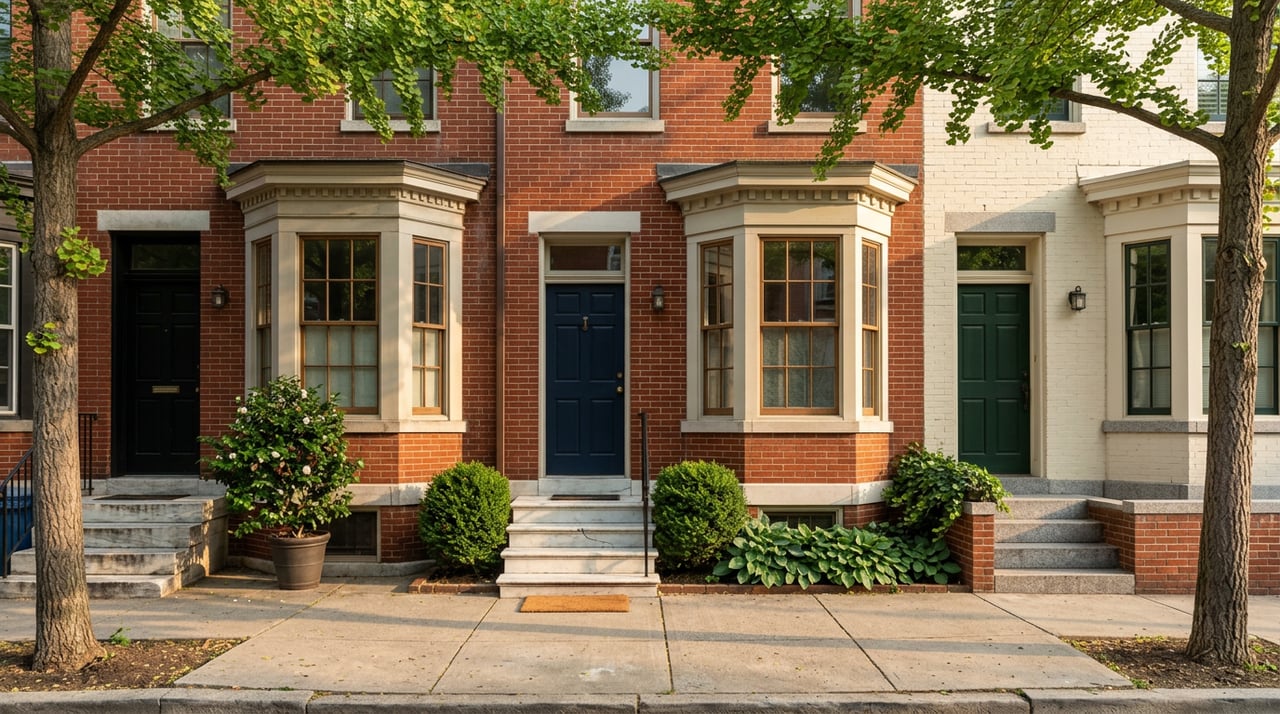
If you are focused on square footage and more independent living, a rowhouse may be the better fit. Rowhouses are one of DC’s defining home types, and they often offer more room than a typical condo.
The DC Policy Center’s housing analysis found that the median rowhouse in DC has 1,372 square feet of living area. That extra space can matter if you want more separation between rooms, additional storage, or room to grow into the home over time.
That said, more space usually comes with a bigger price tag. For many buyers, the question is whether the extra room is worth the larger mortgage, higher taxes, and bigger maintenance responsibility. A rowhouse can be a strong long-term option, but it usually requires more financial breathing room.
Monthly Costs Are Not Just Mortgage
This is where many buyers need to slow down. A condo may have a lower mortgage payment than a rowhouse, but the monthly cost comparison does not stop there.
Condo ownership usually includes HOA or condo fees. According to Fannie Mae’s HOA guidance, those fees help cover common areas, shared building elements, and reserve funds for future repairs. Fees can vary widely based on the building’s age, condition, location, and amenities.
A rowhouse may not have condo dues, but that does not mean it is automatically cheaper each month. You may need to budget more for repairs, exterior upkeep, utilities, and long-term maintenance. The CFPB advises buyers to budget for maintenance, repairs, and utilities separately, and Fannie Mae’s maintenance checklist highlights how much responsibility falls on single-family and townhome owners.
DC Property Taxes Add Up
Property taxes are another important piece of your budget. In DC, the tax rate for Class 1A residential real property is listed by OTR at $0.85 per $100 of assessed value, and the Homestead Deduction reduces assessed value by $89,850 for a principal residence in tax year 2025.
Using those official figures, an owner-occupied $450,000 home would owe about $3,061 per year in property tax after the deduction. An $800,000 home would owe about $6,036 per year. That means the tax difference is driven more by the home’s assessed value than by whether it is a condo or a rowhouse.
For budget-conscious buyers, this is a good reminder to compare the full monthly picture, not just the list price. A lower-priced home often lowers multiple costs at once.
Condo Risk Is Building-Specific
One of the biggest mistakes buyers make is looking at condo affordability without reviewing the building itself. Two condos in the same neighborhood can have very different monthly fees, reserve strength, and financing options.
Fannie Mae’s condo project guidance notes that financing can be affected by critical repairs, inadequate insurance, significant litigation, or hotel-style and short-term-rental operations. In plain terms, a condo that looks affordable on paper may be harder to finance or may carry more risk than you expect.
That is one reason the softer condo market in DC can be a mixed picture. The Washington Post reported that the District condo market was softer than the single-family market in spring 2026, partly tied to aging condo stock and federal job losses. For buyers, that may create negotiating room, but it also makes due diligence more important.
Rowhouse Risk Is Owner Responsibility
A rowhouse usually gives you more control, but it also gives you more to manage. Instead of paying monthly condo dues for shared systems and common-area upkeep, you are more likely to be responsible for your own roof, systems, structure, and exterior maintenance.
That independence can be a real plus if you want fewer shared rules and more control over your property. But it also means you should keep a repair reserve. Even if your monthly payment looks cleaner without HOA dues, unexpected costs can arrive faster when the home is yours alone to maintain.
Verify the Ownership Type
In DC, the exterior style does not always tell you the ownership structure. A home that looks like a rowhouse may still be part of an HOA or condo regime.
Fannie Mae notes that townhomes may still be subject to HOA rules and fees. That is why one of the smartest things you can do early is confirm whether the property is fee simple or condo-owned. That answer affects your monthly costs, lender review, and day-to-day ownership experience.
Which Option Fits a Tight Budget?
For many DC buyers, a condo is the better fit if you want:
- A lower purchase price
- Less cash needed upfront
- Less direct maintenance responsibility
- A more predictable monthly structure
- Potentially more negotiating room in today’s market
A rowhouse may be the better fit if you want:
- More interior space
- More independence from shared building decisions
- No typical condo fee structure
- A housing type that is central to DC’s residential fabric
- Room in your budget for a higher purchase price and repair reserve
The best choice depends on your full cost picture. That includes your mortgage, property taxes, insurance, fees, utilities, maintenance, and any special assessment risk.
Questions to Ask Before You Buy
If you are comparing a condo and a rowhouse in Washington, DC, keep this checklist handy:
- Is the property fee simple or condo-owned?
- What are the monthly HOA or condo fees?
- What exactly do those fees cover?
- Does the building have a reserve fund?
- Are there any recent or pending special assessments?
- Can your lender confirm the condo project is financeable?
- How much should you set aside monthly for repairs and maintenance?
- How do property taxes affect the true monthly cost?
If you are buying on a tight budget, these questions can protect you from choosing the lower list price but the higher real-life cost.
The Smartest DC Budget Move
The smartest move is not automatically choosing the cheaper list price or the bigger home. It is choosing the property that fits your cash to close, your monthly comfort level, and your tolerance for maintenance and risk.
In many cases, a condo is the easier first step into DC homeownership. In other cases, a rowhouse is worth the stretch because of the added space and control. The right answer depends on how you want to live and what you can comfortably carry month after month.
If you want help comparing real numbers, monthly costs, and ownership tradeoffs in the DC market, Sharron Owens can help you sort through your options with clear, practical guidance.
FAQs
Is a condo or rowhouse cheaper to buy in Washington, DC?
- Based on reporting from the Washington Post, condos had a median price of about $450,000 in 2025, compared with $800,000 for single-family residences, which often overlap with DC rowhouses.
Do DC condos always cost less per month than rowhouses?
- Not always. Condos may have lower mortgage payments but can include HOA dues, while rowhouses may have higher mortgage costs but no typical condo fee and more owner-paid maintenance.
How much are property taxes on a DC condo or rowhouse?
- DC taxes Class 1A residential property at $0.85 per $100 of assessed value, and the Homestead Deduction can reduce the taxable assessed value for a principal residence.
What should buyers check before purchasing a DC condo?
- Buyers should confirm what the fees cover, whether there is a reserve fund, whether any special assessments are pending, and whether the condo project is financeable.
Can a DC rowhouse still have HOA fees?
- Yes. A rowhouse-style or townhome property may still be subject to HOA rules or fees, so you should verify the ownership structure before making an offer.