Two parts of Bowie are changing shape this fall, and they are doing it on completely different clocks. One clock runs on a lease and a construction schedule. The other has run on hope for decades, the kind of hope that shows up in city newsletters year after year without a building ever changing hands. This is the first fall where that second clock has a date attached to it, and it is worth understanding why, because it tells you something about how this city actually works.
What Showed Up While Everyone Was Watching Old Town
Bowie Town Center did not need a design charrette, a rebrand, or a task force to get its newest tenant. On July 30, a food hall called Wonder opened at 15443 Excelsior Drive, inside the Town Center, serving a rotating lineup that includes concepts tied to chefs Bobby Flay, Marcus Samuelson, and Michael Symon alongside Tejas Barbecue and Magnolia Bakery. A spokesperson had told local reporters the opening was targeting the end of July. It landed almost exactly on schedule, and it became the company's eighth location in Maryland.
That is the Town Center's whole operating model in one sentence: a retailer signs a lease, builds out a space, and opens on a commercial timeline measured in weeks. It has worked that way since the property was built, and it is why the Town Center has never needed a revitalization initiative. It already has Macy's, Barnes & Noble, BJ's Restaurant & Brewhouse, and now a food hall, because national and regional operators can move fast when the real estate math works.
Compare that to what has been happening two miles away, where the math has never worked the same way, and where nothing has opened on a commercial timeline in years.
The Slow Clock: Why "Crafted in Bowie" Is Different This Time
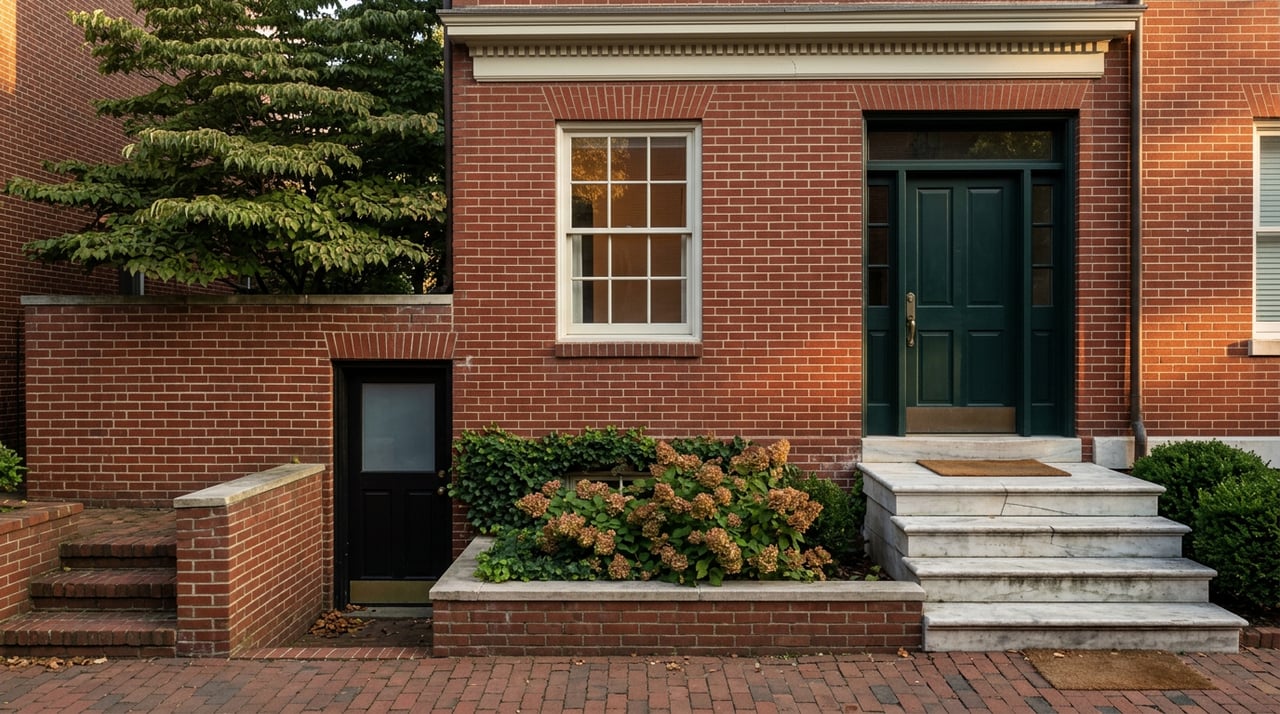
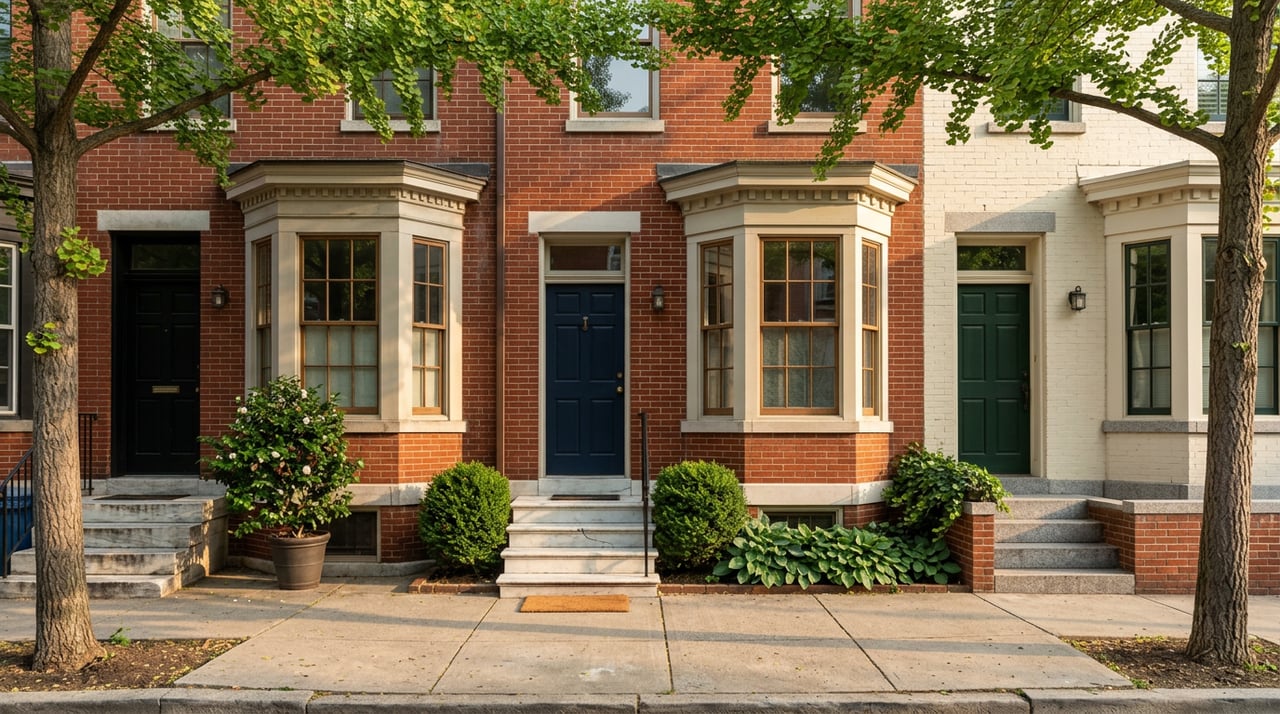
Old Town Bowie is the city's original railroad district, the streets that grew up around the Baltimore and Potomac Railroad's junction point in the 1800s. It still has the brick sidewalks and a scattering of antique shops. What it has not had, for as long as most residents can remember, is a second act. Longtime observers of the district have described it for years as a place where the emphasis stays on "the old," where storefronts sit quiet while the rest of the region grows up around them.
That framing started to shift last October, when the city launched a rebrand called Crafted in Bowie, positioning Old Town as a maker district built around small manufacturing, studio space, and food entrepreneurship rather than antiques alone. Mark Lawrence, president of Inncuvate Community Development Partners, who is guiding the project alongside the city, put it plainly to a local reporter: the district is "an untapped gem in Bowie" that just needs the storefronts filled.
The reason this fall reads differently than last fall's announcement is that the process has actual dates behind it now instead of just a name. The city held an Old Town Bowie Revitalization Design Charette in February, a formal planning session where residents and officials work through what specific buildings become. Seven properties are currently identified for the first phase. One former antique store is slated to become a creative hub called The Foundry, built for artists and craftspeople. Another building is planned as The Stove House, a shared commercial kitchen where food truck operators and small chefs can prep product without leasing a full restaurant.
Neither space is finished. But the shift from "we would like to see this happen" to "here are seven addresses and two names for what goes in them" is the actual news, and it explains why this year's Old Bowie Arts on the Ave Festival matters more than past years' version of the same event. It runs October 3 from 11 a.m. to 3 p.m. on Chestnut Avenue, and vendor applications for local makers are open now through September 1. That is a festival built to showcase the same kind of small manufacturing and craft business the maker district is trying to attract permanently, staged in the same streets where the buildings are supposed to open.
Here is the difference between the two clocks in one view:
| Bowie Town Center | Old Town Bowie | |
|---|---|---|
| Change mechanism | Commercial lease, national operator | City-backed planning process, public-private partnership |
| Recent example | Wonder food hall, opened July 30 | Crafted in Bowie maker district, planning since October 2025 |
| Timeline from announcement to reality | Roughly three weeks (lease signed to grand opening) | Design charette held in February 2026, buildings not yet open |
| What's named right now | A tenant and an opening date | Two building concepts (The Foundry, The Stove House) and seven target properties |
Neither clock is better than the other. A lease-driven mall tenant can vanish just as fast as it arrived if the numbers change. A slow civic process that finally has a design charette behind it and named buildings is a different kind of commitment, the kind that tends to survive a bad quarter. Watching both tells you more about where Bowie is headed than watching either one alone.
The Next Six Weeks
If you want to see either clock in motion, here is where the next several weeks point:
- September 4 to 6: The Chesapeake Baysox close out their 69-game home slate at Prince George's Stadium. Friday, September 4 is Sign Language Jersey night, honoring the Deaf and Hard of Hearing community. Saturday, September 5 brings the season's final postgame fireworks show, one of four scheduled for August and the last of 15 across the year. The team wraps its regular season Sunday, September 6 against the Portland Sea Dogs.
- September 12: The Bowie International Festival takes over the city's public event space starting at 11 a.m., the kind of citywide gathering that pulls people out of their neighborhoods and into the same square for a day.
- Sundays through the fall: The Bowie Farmers Market continues at the Bowie High School parking lot, with more vendors this season than in past years and an occasional free yoga class worked into the morning.
- October 3: Old Bowie Arts on the Ave runs 11 a.m. to 3 p.m. on Chestnut Avenue, the clearest current look at what the maker district is trying to become permanent.
None of these dates require planning ahead by more than a weekend. That is the point. Bowie's calendar this fall is full of low-effort, high-payoff reasons to walk somewhere you have not walked in a while.
What Two Clocks Tell You About One City
The lesson from this fall is not that Old Town is finally "arriving" while the Town Center coasts along unchanged. It is that Bowie runs two entirely different systems for producing something new, and both are active at once right now. If you already live here, that is useful to know, because it means the next new restaurant might show up in the Town Center within a month of a lease signing, while the next new maker space in Old Town will show up only after a design charette, a named building, and a construction schedule that runs on a much longer arc. Watching only one side of the city means missing half the story of how it changes.
If you are curious about what any of this means for property values or timing in either part of Bowie, that is a longer conversation, and one worth having with someone who tracks both clocks closely. Sharron Owens works this market year round, across every jurisdiction in the DMV, and is always glad to talk through what a neighborhood's changes actually mean for the people living in it. You can browse more on the Bowie neighborhood page, or reach out directly to schedule a consultation or request a free home valuation.